
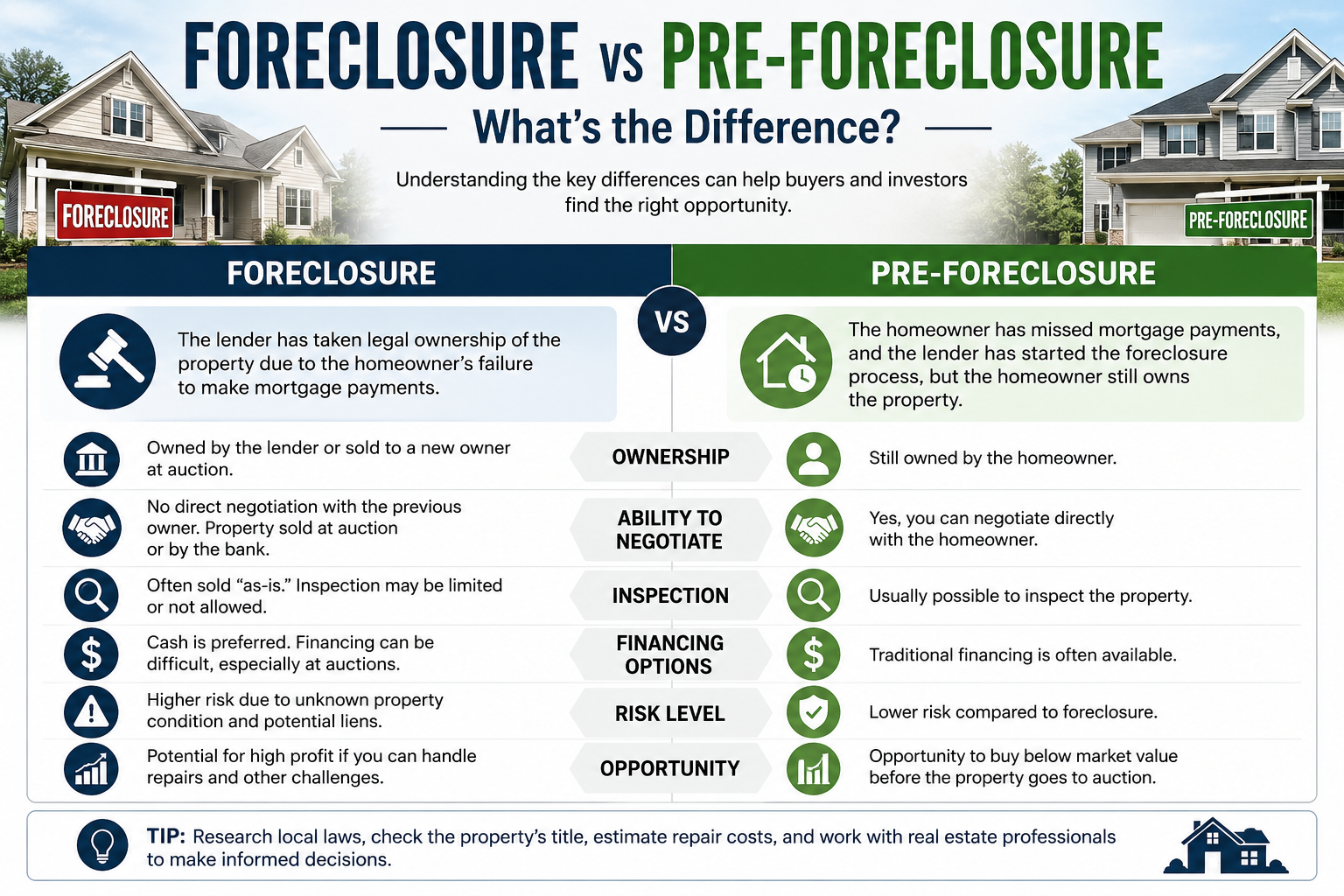
Foreclosure vs. Pre-Foreclosure: What's the Difference?
If you're investing in real estate or looking for below-market-value properties, you've probably come across the terms pre-foreclosure and foreclosure. While they are related, they represent different stages of the foreclosure process and offer different opportunities and risks for buyers and investors.
Understanding these differences can help you make informed decisions and identify the right investment strategy.
What Is Pre-Foreclosure?
Pre-foreclosure is the stage where a homeowner has fallen behind on mortgage payments, and the lender has initiated the foreclosure process by issuing a notice of default or similar legal notice. At this point, the homeowner still owns the property and may have options to avoid foreclosure.
These options often include:
- Paying the overdue mortgage balance.
- Refinancing the loan.
- Negotiating a loan modification.
- Selling the property before foreclosure is completed.
- Arranging a short sale with lender approval.
Because the owner is often motivated to sell quickly, pre-foreclosure properties can present opportunities for investors to negotiate favorable deals.
Advantages of Buying Pre-Foreclosure
- Potential to purchase below market value.
- Less competition compared to public foreclosure auctions.
- Opportunity to inspect the property.
- Ability to negotiate directly with the homeowner.
- Traditional financing is often available.
Challenges
- The homeowner may resolve the default and keep the property.
- Negotiations can take time.
- Title issues or existing liens may need to be resolved.
- Lender approval may be required for some transactions.
What Is Foreclosure?
Foreclosure occurs when the lender completes the legal process of taking ownership of a property because the borrower failed to repay the mortgage. The property is typically sold at a public auction or becomes lender-owned if it does not sell.
Once foreclosure is complete, the original homeowner no longer owns the property.
Advantages of Buying Foreclosures
- Significant discounts may be available.
- Good opportunities for long-term investors.
- Larger inventory during market downturns.
- Banks are often motivated to sell lender-owned properties.
Challenges
- Properties are frequently sold "as-is."
- Limited or no opportunity for inspections before purchase.
- Repair costs can be substantial.
- Competition from experienced investors.
- Potential legal or occupancy issues.
Pre-Foreclosure vs. Foreclosure
| Feature | Pre-Foreclosure | Foreclosure |
|---|---|---|
| Property Owner | Homeowner | Bank or highest auction bidder |
| Negotiation | Directly with homeowner | Through auction or lender |
| Inspection | Usually possible | Often limited or unavailable |
| Financing | Traditional financing usually accepted | Auction purchases may require cash |
| Risk Level | Moderate | Higher |
| Property Condition | Generally better maintained | May require extensive repairs |
| Closing Timeline | Flexible | Usually faster after purchase |
Which Is Better for Investors?
The right choice depends on your experience, budget, and investment goals.
Choose pre-foreclosure if you:
- Want to negotiate directly with sellers.
- Prefer financing over cash purchases.
- Want to inspect the property before buying.
- Are looking for lower-risk investments.
Choose foreclosure if you:
- Have experience evaluating distressed properties.
- Can handle renovation projects.
- Have cash or quick financing available.
- Are comfortable with higher-risk, higher-reward investments.
Tips Before Buying Any Distressed Property
- Research local foreclosure laws, as procedures vary by state.
- Order a title search to identify liens or legal issues.
- Estimate repair costs before making an offer.
- Compare the property's value with recent neighborhood sales.
- Work with experienced real estate professionals when needed.
- Always calculate your expected return on investment before purchasing.
Final Thoughts
Both pre-foreclosures and foreclosures can provide excellent investment opportunities, but they require careful research and due diligence. Pre-foreclosures generally offer more flexibility and lower risk, while foreclosures may provide deeper discounts for investors prepared to handle repairs and legal complexities.
Whether you're a first-time buyer or an experienced investor, understanding each stage of the foreclosure process will help you identify better opportunities and make smarter real estate investment decisions.
Comments
Leave a comment